Video AI: Create Videos from Text and Images
How video AI works and how to use it: text to video, image to video, styles and camera moves, scene merging, voiceover and music in one Voiser account.
· Updated: · 4 min read
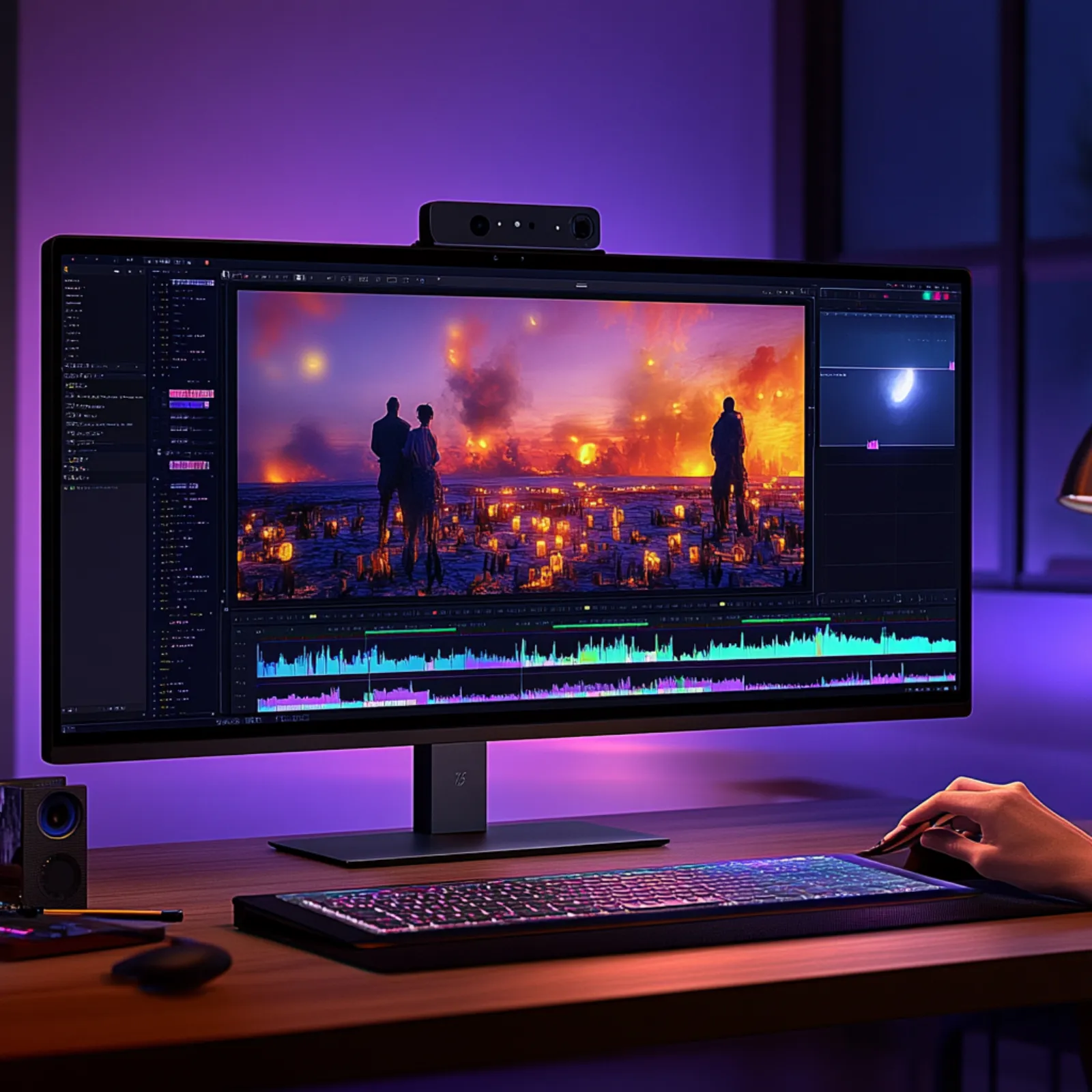
Video AI refers to tools that turn a written description or a still image into moving footage. Instead of organizing a shoot or digging through stock libraries, you describe a scene and get a short clip you can use in a social post, a product promo or a presentation. This guide explains what video AI tools do, what Voiser's video studio offers, and how to write prompts that give consistent results.
What is video AI?
The label covers quite different tools. Some edit footage you already have, some generate talking avatars, and some create scenes from scratch. Voiser's video studio belongs to the last group: it turns the scene you describe, or the image you provide, into a short video clip. It is not an editing suite or an avatar generator, but you can join the clips you create into a sequence and add narration and music.
What Voiser's video studio offers
Videos in the Voiser AI video studio are generated with Google's Veo 3.1. The main features:
- Four ways to generate: text to video, image to video, a transition from a first and a last frame, or up to three reference images to keep characters and products consistent.
- Length and aspect ratio: clips of 4, 6 or 8 seconds in 16:9, 9:16 or 1:1. You can switch the ambient audio the model creates on or off.
- Style and camera: six visual styles, eight camera movements and ready-made templates. AI can enrich your description if you like.
- Variations: generate up to four variations from the same prompt and compare them side by side, and use a negative prompt to leave out what you do not want.
- Extend: lengthen a clip you like in 7-second steps, up to 29 seconds. Extending is available on paid plans.
- Merge scenes: join up to 50 clips with 13 transition types, then add narration from the voiceover studio and a background track from the music studio.
- Quality: Economy gives 720p or 1080p; Standard adds 4K on Pro plans and up.
How to create your first video step by step
- Choose how to start. Starting from a description only, or bringing a product photo to life? Pick text to video or image to video accordingly.
- Describe the scene. Who, where, doing what, in what light? Keep it short but concrete.
- Set the format. Choose aspect ratio, length, style and camera movement. For Reels, Shorts and TikTok, use 9:16.
- Test in Economy. Try the idea at the lower-credit quality first, then generate the prompt you like at higher quality.
- Merge and narrate. Arrange clips into scenes, pick transitions, and add narration and music.
- Download. Watch the result, adjust the prompt and regenerate if needed, then download your video.
How to write a good video prompt
The quality of what you get from video AI depends heavily on the prompt. Four habits help in most cases:
- Be concrete. Instead of "a nice landscape", name the place, the time of day, the light and what the subject is doing.
- Name the camera move. A slow push-in or a side tracking shot, written in the prompt or picked from the list.
- Use images for consistency. A starting or reference image keeps a product or a character looking the same from scene to scene.
- Exclude what you do not want. Leave out text, crowds or certain colors with a negative prompt.
An example prompt:
A small fishing boat leaving a misty harbor at sunrise. Warm golden light, calm sea. The camera slowly pulls back from the pier. Cinematic style.
Where video AI is used
- Social media: short, eye-catching footage for posts and stories.
- Products and ads: add motion to a product photo or visualize an ad concept quickly.
- Presentations and training: B-roll that supports your narration without a stock footage search.
- Pre-visualization: see a scene before the shoot and give the whole team the same picture to discuss.
FAQ
How long can a video be?
A single clip is up to 8 seconds and can be extended to 29 seconds. For longer videos, you merge up to 50 clips into one sequence.
How many credits does a video use?
Credits depend on the length in seconds and the quality you choose, and Economy uses fewer. The credit calculator gives you an estimate.
Is there a watermark on the free plan?
Yes. Free plan videos are watermarked and generated at Economy 720p. Paid plans give watermark-free output with commercial use rights.
Can I make talking avatar videos?
Voiser has no avatar tool. The video studio creates scene and image-based clips, and you can add narration from the voiceover studio.