
 Español
  Français
  Deutsch
  Italiano
  Turkish
  Portuguese
  Russian
 Real or AI? A New Era in AI Video Generation
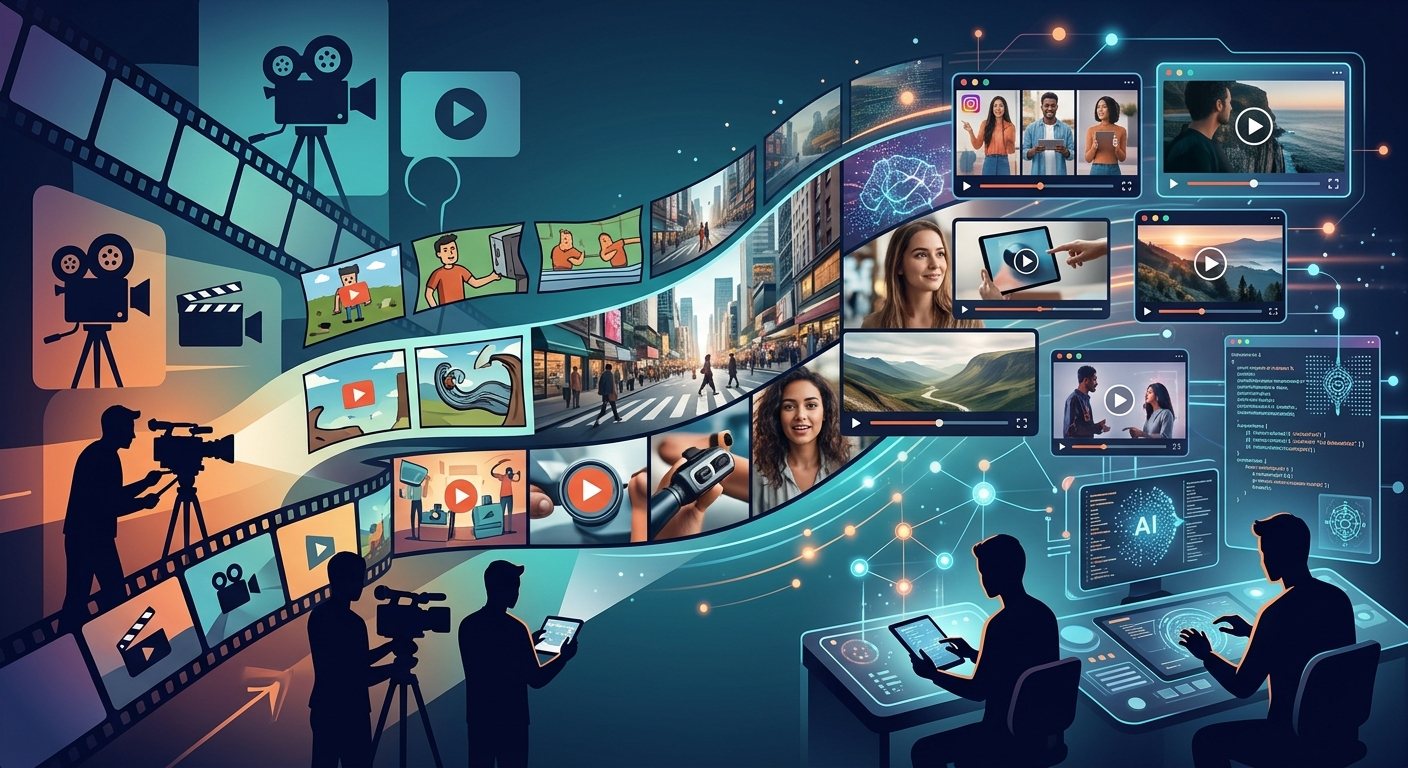
Real or AI? A New Era in AI Video Generation Has Begun
A few years ago, it was quite easy to recognize a video generated by artificial intelligence. Hands looked distorted, facial expressions felt unnatural, camera movements did not appear realistic, or the lighting and physics in the scene eventually revealed that the video was AI generated. Today, the situation is very different. Video generation tools no longer create only visually appealing videos. They can now produce scenes that are very close to real camera footage, with natural facial expressions, consistent lighting, realistic environments, and movement flows that fit the scenario.
This shift is creating a major turning point in content production. Users can no longer always understand within the first few seconds whether a video was filmed in real life or generated by artificial intelligence. Especially in social media, advertising, education, product promotion, and short video formats, AI generated content is becoming increasingly natural in appearance.
Why is it becoming harder for users to tell the difference?
The main reason is that video generation models have improved not only in image quality but also in their ability to build context. Older AI videos could often make a single frame look good, but once the motion started, consistency would break. In newer generation tools, the character’s face, clothing, ambient light, and camera movement can remain much more stable throughout the video.
Another important factor is the change in user habits. On social media, we already see highly filtered, edited, color corrected, and heavily produced content. As a result, the visual line between real footage and AI generated video is naturally becoming blurred. When users see an aesthetic and fluid video on screen, they may no longer question whether it was shot with a camera or created with a few lines of prompt.
Short video formats make this distinction even more difficult. In an eight, ten, or fifteen second advertising video, viewers usually do not examine the details. They focus on the first impression, the feeling, and the message. This makes AI video tools especially powerful for marketing and product promotion.
What does this mean for brands?
For brands, this development has two different meanings. First, the content production process is becoming much faster and more accessible. In the past, creating a product video required a location, equipment, actors, lighting, editing, and post production. Today, an idea, the right prompt, and a suitable video generation tool can quickly turn into an advertising video.
Second, the creative barrier is getting lower. Small teams, startups, and independent content creators can now produce professional looking videos without the need for large production budgets. This creates a major advantage, especially for mobile apps, digital products, ecommerce brands, and social media campaigns.
However, ethics and transparency are also becoming more important. AI generated videos can be highly valuable when used for creative purposes. But when they are presented as real people, real events, or news footage, they may create trust issues. That is why discussions around labeling and marking AI generated content are increasing around the world.
AI video is no longer just experimental
Video generation tools are no longer fun experimental tools used only by technology enthusiasts. Advertising agencies, mobile app teams, content creators, education platforms, and product marketing teams are now making these tools part of their active workflows.
Showing a product use case, explaining an app feature, preparing an eye catching video for social media, or producing content variations for different target audiences is now much easier. The same idea can also be recreated more quickly for different countries, languages, styles, and platforms.
At this point, Voiser’s video generation tool stands out as one of the solutions that makes the content production process easier. Voiser AI Video Generator allows users to create videos from text and images. This means that a campaign idea, product promotion, social media video, or creative advertising concept can quickly be transformed into a visual output. Especially for mobile app promotions, digital product ads, concept videos, and short social media content, such tools help teams save time.
One of the most important advantages Voiser offers here is that it simplifies the technical production process. Instead of dealing with complex video editing tools, users can express their ideas through text or create a moving video from an image. This brings video production to a point where not only professional editors but also marketing teams, startups, and content creators can use it comfortably.
As realism increases, responsibility also grows
The fact that AI videos are becoming more realistic is not only a technological success. It also creates a new area of responsibility. Brands should use these tools in a way that does not mislead viewers, does not manipulate real people or events, and supports reliable and ethical content production.
Especially when AI video is used in product promotions, the features of the product should not be exaggerated. In educational or informative content, fictional scenes should not be presented as real data. If human like characters are used, unauthorized identity imitation should be avoided. AI video tools are extremely powerful for creative production, but this power should be used in a way that builds trust.
A new kind of media literacy is also developing on the user side. The fact that a video looks high quality no longer means that it is real. Similarly, the fact that it was generated by AI does not mean that it is worthless or unreliable. What matters is the purpose of the content, how it is used, and how transparent the process is.
Conclusion
Artificial intelligence has changed the speed and scale of video production. A good video idea no longer always requires a large production team. With the right tools, it is possible to create eye catching, realistic, and platform ready videos in minutes.
But the most important question of this new era is this: If a video looks real, how should we evaluate it?
The answer lies not only in technology but also in how it is used. AI video tools open a wide creative space for brands, creators, and teams. Tools like Voiser make this process more accessible by helping ideas turn into videos quickly. In the coming period, the winners will not only be those who create the most realistic videos, but those who use this technology in the most creative, transparent, and trustworthy way.
Stay Connected with Us on Telegram and Discord to Follow Us More Closely